

The Indian startup ecosystem has produced several remarkable stories, but few have transformed everyday life the way Wakefit has. Built by Chaitanya Ramalingegowda, Wakefit began as a simple idea to help Indians sleep better and eventually grew into a ₹2,300 crore company that changed an entire industry. Today, when people discuss entrepreneur stories, especially those involving successful entrepreneurs in India, Wakefit stands among the most inspiring examples. It represents innovation, sustainability, and sheer customer understanding at its finest. It is one of the biggest startup success stories in India, and one that continues to inspire aspiring founders and business leaders across the country.
Wakefit’s journey started with a problem that almost every Indian faced but very few acknowledged: the poor quality of sleep. While people spent money on expensive gadgets, home décor, and lifestyle products, they often ended up sleeping on outdated mattresses that did not support the body. Chaitanya noticed this mismatch early on. He saw that the mattress industry in India was dominated by old brands that relied on showrooms, retailers, and middlemen, which increased the price without improving the product. Customers were unknowingly paying more for less. This observation became the seed that grew into one of the most noteworthy Indian startups in recent times.
Chaitanya’s approach was rooted in curiosity and research. Before launching Wakefit, he spent months studying customer behaviour, understanding sleep patterns, testing materials, and identifying flaws in traditional mattresses. He discovered that most mattresses sold in India were not designed scientifically. Instead, they relied on decades-old methods with no focus on comfort, durability, or body support. This insight made him realise that the market was not just underserved but misunderstood. It was a turning point that shaped Wakefield’s entire identity.
Unlike many founders who rush into production, Chaitanya first dedicated himself to understanding real customer pain points. He met people, collected feedback, and tested multiple prototypes. His goal was not to build just another product but to create something that truly improved people’s lives. This customer-first mindset is one of the defining characteristics of entrepreneurs in India who have built lasting impact. Wakefit’s foundation was not based on assumptions but built entirely on data and real consumer experiences. This is what makes it one of the strongest and most relatable entrepreneur stories in the Indian business landscape.
Once the mattress was designed to perfection, the next challenge was to deliver affordability without compromising quality. This is where Wakefit introduced a disruption that changed the industry forever. Traditional mattress brands are sold through layers of distributors, dealers, and showrooms, adding significant markups to the final price. Chaitanya eliminated every middleman and embraced the Direct-to-Consumer model long before it became popular in India. By selling directly from the factory to the customer’s home, Wakefit offered premium-quality mattresses at nearly half the market price. This transparency in pricing and communication helped the brand gain instant trust, especially among young consumers who valued honesty and clarity.
The D2C model also allowed Wakefit to offer something traditional brands struggled with: consistent quality and seamless customer experience. Every customer interaction provided valuable data, and every review helped improve the product. Over time, Wakefit became more than a mattress company; it became a customer-obsessed brand. This deep connection between customers and the brand contributed significantly to its rise as one of the biggest startup success stories and a benchmark for many Indian startups aspiring to build a direct relationship with their users.
Wakefit’s marketing journey is equally iconic. While many brands spend huge budgets on ads and influencers, Wakefit focused on creativity, relatability, and engagement. Their most famous initiative, the “Sleep Internship”, became an internet sensation. The company invited people to get paid for sleeping, and as bizarre as it sounded, it immediately caught the attention of millions. News channels, social media pages, and bloggers across India covered the campaign. It was playful, smart, and perfectly aligned with Wakefit’s mission of promoting better sleep. Campaigns like these did more than increase brand awareness they made Wakefit a household name and showcased how innovation in marketing can build strong emotional connections with customers.
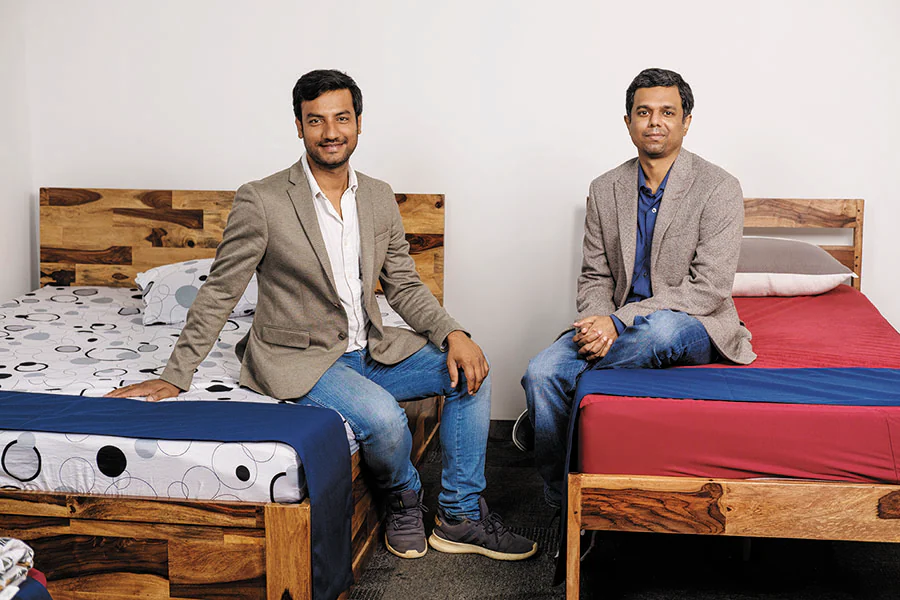
Another important aspect of Wakefit’s growth is its internal culture. Chaitanya believed that a brand rooted in honesty must reflect the same values within the company. Transparency, trust, and simplicity are deeply embedded in Wakefit’s work culture. The team is encouraged to make decisions based on data, customer insights, and long-term thinking rather than short-term trends. This cultural clarity strengthened Wakefit as it scaled, helping the company maintain consistency even as it expanded into new product categories. Such internal discipline is often what sets apart successful entrepreneurs in India from those who burn out quickly.
As Wakefit continued to grow, it gradually expanded into the broader home furniture category. Once customers trusted their mattresses, they naturally looked to Wakefit for beds, sofas, study tables, wardrobes, and home décor. Wakefit didn’t rush this expansion. Each product went through the same rigorous design process, customer interviews, and quality testing. They focused on affordability, durability, and modern design. Before long, Wakefit had transformed from a mattress company into a full-fledged home solutions brand competing with some of the biggest furniture names in India. The expansion was not just successful; it was thoughtfully planned and executed, proving once again why Wakefit remains one of the biggest startup success stories in India.
A major reason for Wakefit’s continuous success is its commitment to sustainability. Unlike brands that treat sustainability as a marketing slogan, Wakefit has integrated it into the core of its operations. The company focuses on responsible sourcing of materials, reducing waste in manufacturing, designing long-lasting products to minimise landfill contribution, and optimising packaging to reduce carbon footprint. This approach has helped Wakefit position itself as one of India’s most promising sustainable startups. As consumers become increasingly conscious about the environment, Wakefit’s commitment to sustainability strengthens its brand value and sets it apart from competitors.
Scaling a startup from an idea to a ₹2,300 crore business requires more than a good product—it needs vision, discipline, and the ability to adapt. Wakefit’s journey is filled with thoughtful decisions, from opening new manufacturing units to improving logistics, expanding delivery networks, hiring skilled teams, and building omnichannel experience centres. Each decision contributed to the brand’s growth and helped it gain recognition as a symbol of innovation within the entrepreneurial India admires.
Throughout Wakefit’s growth, one thing remained constant: the focus on customer satisfaction. The company actively uses customer feedback to evolve its products. Their customer support team prioritises relationship-building over transactional interactions, which strengthens brand loyalty. This customer-centric approach has been instrumental in helping Wakefit achieve its position as one of the successful entrepreneurs in India and has earned Chaitanya widespread respect in the startup community.
Today, Wakefit is not just a mattress company; it is a revolution that has redefined sleep culture in India. A brand that started with a mission to improve sleep quality has grown into a household name trusted by millions. The success of Wakefit is not accidental; it is a result of consistent innovation, customer obsession, sustainable thinking, and the courage to challenge outdated systems. When people look for entrepreneur stories that truly inspire, Wakefit’s journey stands out because it is built on genuine purpose and long-term value creation.
Chaitanya Ramalingegowda’s story is a powerful reminder that some of the greatest opportunities lie in ordinary problems. While many entrepreneurs chase glamour and trends, Chaitanya chose to solve a simple but meaningful issue: how to help Indians sleep better. His journey shows that even the most basic industries can be transformed with innovation, empathy, and thoughtful execution. This is why Wakefit continues to inspire countless entrepreneurs in India who want to build purposeful, scalable, and impactful businesses.
The evolution of Wakefit into a ₹2,300 crore brand proves that success does not always come from invention; it often comes from reinvention. Chaitanya didn’t create a new category; he improved an existing one. But he did it with such precision, creativity, and dedication that Wakefit became one of the biggest startup success stories the nation has ever seen.
In every sense, Wakefit represents what modern Indian startups can achieve: a blend of innovation, sustainability, affordability, and exceptional customer focus. Chaitanya’s journey is a beacon of inspiration for anyone dreaming of building something valuable and lasting. It reminds us that true entrepreneurial success lies not just in making profits but in improving lives and doing it with integrity, purpose, and heart.