

In the growing ecosystem of Indian startup success stories, some journeys stand out not because they begin in corporate boardrooms or metropolitan co-working spaces, but because they rise from the heart of India’s soil. One such incredible journey is that of Pritpal Singh, a Chandigarh-based farmer who transformed his life and the lives of countless other farmers by introducing a revolutionary soilless farming model. His agri-tech venture Farmcult, founded in 2020, has now become one of the green startups in India redefining future farming practices. What began as the personal quest of a passionate farmer has evolved into a remarkable example of sustainable innovation, earning Farmcult recognition among the fastest-growing startups in India.
Pritpal Singh grew up surrounded by fields, crops, and stories of harvest seasons. Farming wasn’t just a profession for his family it was a legacy. Yet, as he pursued higher education in Nagpur and stepped into a corporate career in Mumbai, he couldn’t detach himself from the agricultural roots that shaped him. The challenges farmers faced, soil degradation, unpredictable yields, pest attacks, and limited returns continued to weigh on him. His visits home strengthened a realisation: agriculture needed innovation, not just tradition.
Even during his job in Mumbai, he felt drawn not to corporate promotions but to the idea of building something meaningful through farming. His ambition wasn’t merely to cultivate crops but to cultivate change. This deep-rooted connection inspired his decision to leave the corporate world and return to Chandigarh to modernise his family’s farming practices. What followed soon became one of India’s most inspiring green stories.
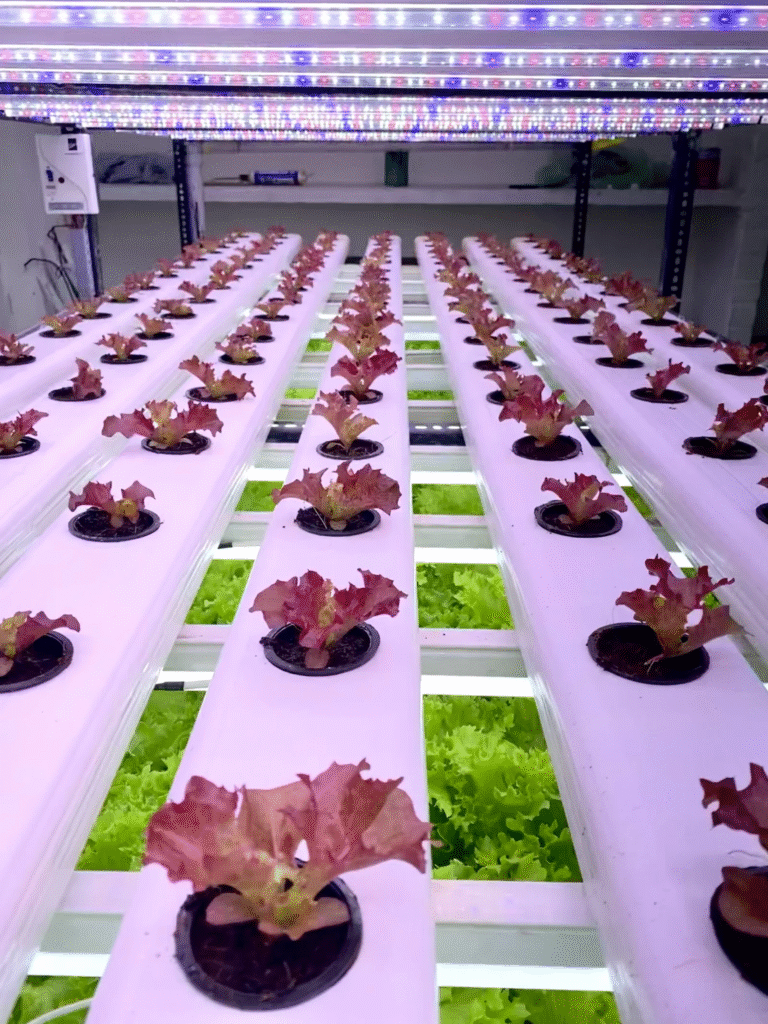
In 2016, before launching Farmcult, Pritpal made a bold move that many wouldn’t dare attempt. He invested ₹60 lakhs into setting up a hydroponic farm on his 2.5-acre land. Hydroponics, growing plants without soil, was still an unfamiliar concept to most Indian farmers. Many doubted the viability of investing such a large sum into what they considered an “unpredictable” technique. But for Pritpal, it was the only way forward. He believed that if farming was to stay profitable, sustainable, and attractive to future generations, then adopting new-age technology was not a luxury; it was a necessity.
The initial phase of his journey, however, was far from smooth. Despite the heavy investment, the hydroponic setup didn’t perform the way he expected. Highly paid consultants provided guidance but often failed to offer practical solutions tailored to Indian climatic realities. Temperature fluctuations led to poor crop growth, and technical flaws in the setup resulted in repeated crop losses. There were months when the output didn’t even cover the maintenance charges. For many, this would’ve been reason enough to shut down the project and return to traditional farming or even the corporate world. But Pritpal Singh wasn’t willing to step back.
Determined to make hydroponics work in Indian conditions, he began researching the science behind soilless farming, nutrient management, water flow patterns, climate control, and plant behaviour. He studied international hydroponic models, experimented with nutrient formulations, and modified the system repeatedly until he identified reliable, optimised methods suited for Indian weather patterns. What began as a series of failures slowly transformed into a breakthrough.
This resilience marked the true beginning of Farmcult, a brand built on scientific consistency, sustainable agriculture, and practical farming solutions. By the time Farmcult formally launched in 2020, Pritpal had fine-tuned the system so well that his hydroponic farm became a showcase example for the region.
Today, his hydroponic farm holds 25,000 leafy plants, including varieties like lettuce, spinach, and exotic greens, all grown without a single gram of soil. But the most impressive part of this transformation is the output. According to The Better India, the farm produces nearly 800 kg of fresh green produce every month, demonstrating yields five times higher than traditional farming. The story doesn’t end here; his electricity consumption dropped by 80%, thanks to optimised systems and efficient energy usage.
This is where Farmcult becomes one of the most compelling green startups in India, merging sustainability with profitability. In a world where soil-borne diseases, declining soil fertility, and climate change threaten crop yields, hydroponics offers a stable and predictable alternative. Farmcult’s model reduces land dependency, conserves water, minimises energy consumption, and eliminates the risk of soil-driven pests or diseases. Each plant receives controlled nutrition, ensuring uniform growth and improved quality. This disciplined, scientific approach to farming is exactly what positions Farmcult among the fastest growing startups in India in the agritech category.
Pritpal’s farm is not just a hydroponic field it is a fully structured ecosystem equipped with a temperature-controlled polyhouse, ensuring consistent climatic conditions regardless of external weather. The farm also includes a low-vertical farming centre that further enhances productivity by maximizing space utilisation. Through these innovations, Farmcult demonstrates how technology can amplify farm output even without expanding farmland.
But Farmcult’s impact goes beyond its own produce. Pritpal realised that many Indian farmers, NRIs interested in agricultural investments, and urban entrepreneurs wanted to enter hydroponics but lacked proper support. Most consulting services charged high fees without providing long-term assistance. Many individuals who invested in hydroponics failed because they received poorly designed systems and minimal after-sales guidance.
To solve this problem, Farmcult began offering customised hydroponic farm setups, complete with six months of hands-on support, ensuring clients not only set up their farms but also succeed in running them. This became a turning point. Farmcult’s services include everything from farm design, nutrient management systems, climate control strategies, and crop planning to market distribution support, making it one of the most influential green startups in India fostering sustainable farming entrepreneurship.
This startup-driven model transformed Farmcult from a single-farm experiment into a scalable agricultural business. People from across India began approaching Pritpal to learn hydroponics. Some visited his farm in Chandigarh to witness soilless farming in action, while others sought full-scale projects in their cities. Farmcult’s promise to provide complete management from farm setup to produce distribution appealed to investors seeking long-term agricultural ventures. This is how Farmcult joined the wave of Indian startup success stories, standing beside giants while staying deeply rooted in the ethics of sustainability.
The hydroponics boom is not just a trend; it is becoming an essential response to India’s agricultural challenges. With shrinking land resources, climate uncertainty, and a need for cleaner, pesticide-free food, brands like Farmcult are shaping a future where green innovation isn’t just celebrated, it is necessary. The startup’s journey is now frequently mentioned among green stories of India, inspiring young entrepreneurs, tech innovators, and farmers to adopt modern farming techniques that prioritise sustainability.
Farmcult showcases what the future of farming could look like: temperature-controlled polyhouses, automated water distribution channels, vertical growing racks, nutrient management systems, and optimised energy consumption. This isn’t farming as we know it from decades ago this is farming built for the next century. It is high-tech, eco-friendly, scalable, and immensely profitable.
Notably, Pritpal’s farm, built on innovation and experimentation, is today a model that proves sustainable farming can generate higher income than traditional methods. Hydroponics doesn’t need vast land; it requires knowledge, precision, and technology. The fact that Pritpal earns five times more than traditional farmers demonstrates the economic power of sustainable agriculture. His reduced electricity bills and optimised operating system show that green technology is not expensive; it is efficient when executed properly.
In the landscape of fastest growing startups in India, agritech ventures are often overshadowed by fintech, SaaS, and e-commerce platforms. Yet Farmcult’s rise shows that agriculture, when blended with technology, can become one of the strongest pillars of the Indian startup ecosystem. Its growth is not fueled by glamorous branding or heavy VC funding, but by real results, real impact, and real transformation for Indian farmers.
With increasing demand for pesticide-free food and rising awareness about sustainable practices, Farmcult is expected to expand further into urban farming models, restaurant supply chains, and educational programmes for hydroponic enthusiasts. Pritpal aims to empower thousands of farmers by helping them build profitable soilless farms and introducing technologies that reduce environmental damage. In doing so, he contributes to building a future where green startups in India lead the way in innovation, sustainability, and circular economy solutions.
Pritpal Singh’s journey from a farmer’s son to a hydroponic pioneer showcases how passion paired with innovation can not only elevate a family farm but also inspire a nationwide movement. This is more than an agricultural transition; it is one of India’s most inspiring green stories, capturing the essence of what modern-day entrepreneurship should look like. His success proves that a farmer can be an innovator, a technologist, a startup founder, and an environmentalist all at once.
As Farmcult continues to grow, its significance in the ecosystem of Indian startup success stories will only increase. The brand embodies resilience, forward-thinking, and sustainable impact, core values that define the green startups in India, shaping a healthier, more sustainable future. Whether it is through hydroponic installations, leafy vegetable production, or advisory services, Farmcult symbolises a revolution that began on a 2.5-acre piece of land and is now influencing farming models across the nation.
The story of Farmcult is not merely about a startup, it is about rewriting the narrative of Indian agriculture. It is about showing that farming can be profitable, technologically advanced, environmentally conscious, and appealing to the younger generation. And above all, it is about proving that when passion meets innovation, even a single farmer can build one of the most powerful green startups in India, inspiring the country and contributing to a greener, more sustainable tomorrow.